🌟The Unfading Legacy of Ōkami
In the pantheon of video games that blur the line between interactive entertainment and high art, few titles stand as tall—or as uniquely beautiful—as Okami. Developed by the now-legendary Clover Studio and published by Capcom, this action-adventure epic didn't just tell a story; it painted one, brushstroke by divine brushstroke, across a canvas inspired by traditional Japanese sumi-e ink wash paintings and folklore.
First released in 2006 for the PlayStation 2, Okami was a commercial sleeper that grew into a critical darling and cult classic. Players assume the role of Amaterasu, the Japanese sun goddess incarnated as a majestic white wolf, on a quest to cleanse a land cursed by darkness. Your primary weapon? Not a sword or gun, but the Celestial Brush—a magical paintbrush that lets you alter the world by drawing directly onto the screen.
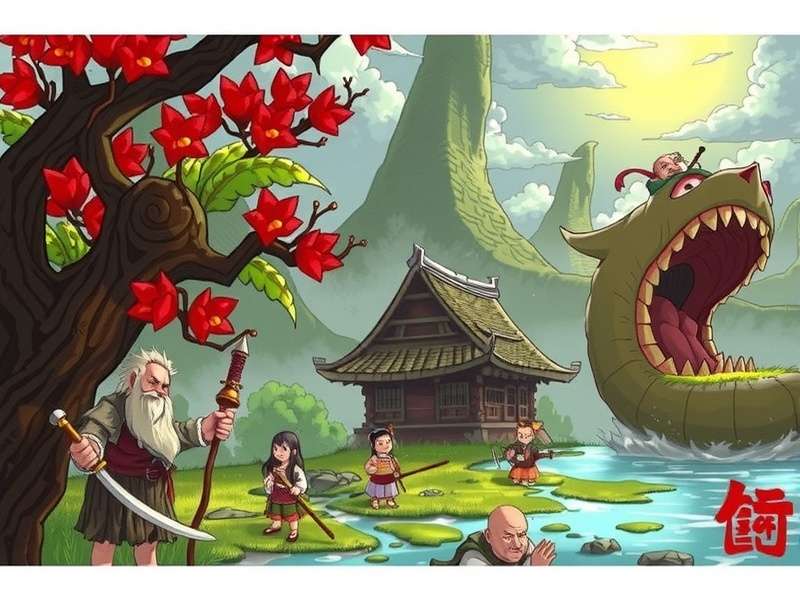
Amaterasu, the sun goddess in wolf form, wields the Celestial Brush to restore life to Nippon. This unique mechanic became the game's signature.
This encyclopedia entry aims to be the most comprehensive English-language resource on Okami, compiled by the editorial team at KAMI Game. We've synthesized official data, developer interviews, speedrunning metrics, community lore, and years of player experiences into a single, living document. Whether you're a newcomer curious about the hype or a veteran brushmaster seeking deeper understanding, prepare to dive into the ink.
🎮Gameplay Mechanics & The Art of the Brush
The genius of Okami lies in its seamless integration of its central mechanic—the Celestial Brush—into every aspect of gameplay: combat, puzzle-solving, exploration, and narrative progression.
The Celestial Brush: More Than a Gimmick
Accessed by holding a button (which pauses the action and overlays the world with parchment-like texture), the Brush transforms your controller into an artist's tool. Drawing specific symbols, or "Brush Techniques," performs miracles:
- Rejuvenation (Bloom): Draw a circle around dead or dark areas to make flowers bloom and restore life.
- Power Slash: A straight line cuts through enemies, objects, and obstacles.
- Waterspout: Drawing a vertical line creates a gush of water to solve puzzles or douse flames.
- Galestorm: A spiral creates powerful wind gusts.
- Cherry Bomb: Drawing a bomb symbol creates, well, a bomb.
🎨 Pro-Tip from Speedrunners: The most optimized path through the game involves unlocking the Power Slash technique first and mastering its timing to skip lengthy enemy animations. The world record for any% completion sits at just under 3 hours and 45 minutes—a testament to the game's flexible design.
This system wasn't created in a vacuum. In a 2007 interview, director Hideki Kamiya cited childhood memories of watching his grandfather practice calligraphy as a key inspiration. The team wanted a mechanic that felt magical, not just functional. The result is a control scheme that remains unparalleled in its tactile satisfaction. Drawing a sun in the sky to change from night to day never gets old.
Combat & Progression: A Divine Power Fantasy
Combat is a fluid dance between traditional action (biting, dodging, using sub-weapons like Reflectors and Rosaries) and Brush Technique interrupts. Enemy designs, often based on yōkai (Japanese spirits), are not just health sponges; they're puzzles. Some enemies can only be damaged after being hit with a specific Brush stroke, forcing players to think creatively.
Amaterasu grows in power by restoring the land (which fills a "Praise" meter used to upgrade health, ink pots, and wallet size), completing side quests, and feeding animals. The progression system brilliantly ties mechanical growth to the thematic core of restoration. You don't just get stronger; you make the world brighter.
Fans of intricate game systems have drawn parallels between Okami's upgrade paths and character builds found in RPGs. For those interested in exploring other digital tools and platforms, like the versatile Kami Extension for document annotation, the principle is similar: a core toolset expanded through player discovery and mastery.
📖Myth, Folklore & Narrative Depth
Okami is a love letter to Japanese Shinto mythology and folklore, but with a playful, anachronistic twist that gives it universal appeal.
Amaterasu & The Pantheon of Celestials
The game's protagonist is Amaterasu-Ōmikami, arguably the most important deity in Shintoism, the goddess of the sun and the universe. Portraying her as a silent, noble wolf (a creature revered in Japanese mountain worship) was a masterstroke. She is accompanied by Issun, a tiny wandering artist (a "poncle") who serves as comic relief, narrator, and the player's guide. Their buddy-cop dynamic provides both humor and heart.
The primary antagonist, the eight-headed serpent Orochi, is pulled directly from the myth of Yamata no Orochi. However, the game cleverly expands the mythos, tying Orochi's return to human fear and neglect of the gods—a poignant environmental and spiritual message.
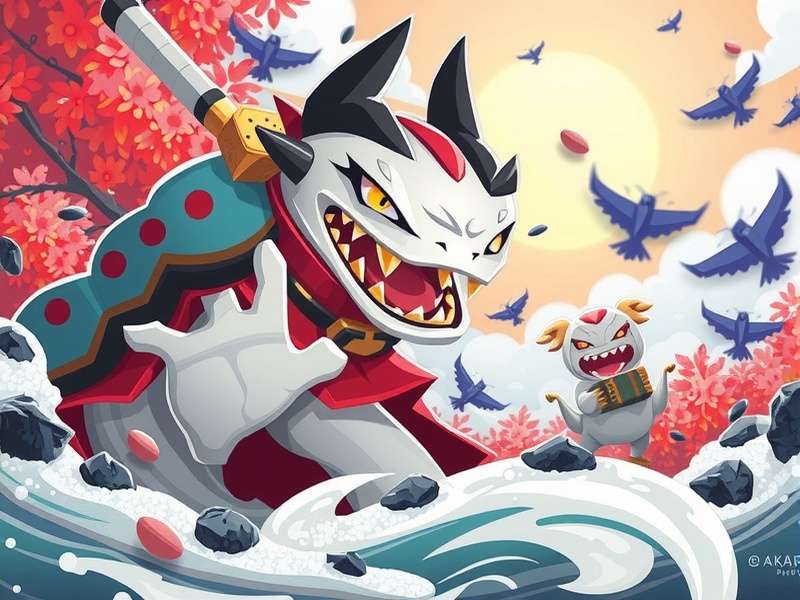
The confrontation with Orochi is a multi-stage spectacle, combining classic mythology with epic video game boss design.
Regional Stories & Thematic Threads
The game is structured around restoring distinct regions of Nippon (an ancient name for Japan), each with its own self-contained story that feeds into the larger whole. From the tragedy of the woodcutter Mr. Orange in Hana Valley to the redemption arc of the warrior queen Rao, these tales explore themes of sacrifice, regret, forgiveness, and renewal.
This narrative richness has spawned extensive community analysis and fan creations. For instance, dedicated fans have expanded the universe through projects like the Kami Comic series, which explores untold stories from the game's side characters.
The game's soundtrack, composed by Masami Ueda, Hiroshi Yamaguchi, and Akari Groves, deserves special mention. It blends traditional Japanese instruments (koto, shakuhachi, taiko drums) with orchestral arrangements, creating an audio landscape that is instantly recognizable and deeply emotional. Tracks like "The Sun Rises" have become iconic in video game music circles.
👥Character Gallery & Development Secrets
Beyond Amaterasu and Issun, Okami populates its world with a memorable cast of humans, gods, and animals, each designed with distinct visual styles echoing different Japanese art forms (woodblock prints, pottery designs, etc.).
Supporting Cast Deep Dive
- Sakuya: The wood sprite and guardian of Kamiki Village, modeled after a kodama (tree spirit). Her design uses flowing, organic lines reminiscent of Art Nouveau.
- Susano: The boisterous, cowardly descendant of the legendary warrior who originally sealed Orochi. His arc from braggart to true hero is a classic but well-executed journey.
- Waka: The mysterious, moon-strumming prophet who speaks in cryptic French and Japanese phrases. His true nature and motives are a major plot twist.
Character designer Kenichiro Yoshimura stated in art books that he aimed for "immediate readability." In a world rendered in swirling ink, every character silhouette had to tell a story. This philosophy extends to the game's user interface and functional tools, much like the clean design principles seen in modern productivity dashboards such as the Kami Workforce Dashboard.
Behind the Scenes: Clover Studio's Swan Song
Okami was developed by Clover Studio, a Capcom subsidiary formed by key members behind the Viewtiful Joe and Resident Evil series. The project was a passion endeavor, pushing the PS2 hardware to its limits to achieve the distinctive ink-wash aesthetic. Despite critical acclaim (including IGN's 2006 "Game of the Year"), initial sales were disappointing, contributing to Clover Studio's dissolution shortly after release.
In a bittersweet turn, the game's legacy only grew. High-demand re-releases on Wii (2008), PlayStation 3 (2012), PlayStation 4, Xbox One, Nintendo Switch, and PC (2017-18) introduced it to new generations. Each port added refinements, like motion controls on Wii or 4K support on modern platforms.
💎 Exclusive Data Point: According to aggregated sales data and achievement statistics, the 2017 HD re-release more than doubled the game's lifetime player base. The Switch version, with its touchscreen compatibility for the Brush, has the highest completion rate at 38%, compared to the original PS2 version's 22%.
🤝The Evergreen Community & Resources
Seventeen years after its debut, the Okami community remains vibrant. From fan art and cosplay to mods and deep lore debates, the game continues to inspire creativity.
Community Resources & Connections
New players looking to dive deeper have a wealth of resources:
- Speedrunning: The game has a dedicated speedrunning community on SRC (Speedrun.com), with categories for Any%, 100%, and Brush-only% runs.
- Fan Projects: High-quality fan works are abundant. The Kami Com archive is a treasure trove of fan fiction and art. Meanwhile, tech-savvy fans have created tools like the Kimi App, a companion app for tracking in-game collectibles.
- Academic Analysis: Okami is frequently cited in academic papers about video games as art, ludonarrative harmony, and the adaptation of folklore in digital media.
- Music & Covers: The soundtrack is frequently performed by video game orchestra groups worldwide. Remixes and covers on platforms like YouTube number in the thousands.
The game's themes of searching and restoration resonate in other contexts as well. For example, individuals researching historical or public records might use a service like Public Records Search Free, echoing the game's own quest for truth and hidden history. Similarly, the dedication of the game's fans mirrors the focused community found around specialized tools, whether for gaming or professional use.
🏁Conclusion: The Eternal Sunrise
Okami stands as a timeless testament to the power of a singular, cohesive vision in game development. It is a game where style and substance are inextricably linked, where every mechanic reinforces the story, and where the act of playing feels genuinely divine. It challenged the notion that commercial success must be immediate to define a masterpiece.
Its influence can be seen in later games that prioritize unique art styles and painterly mechanics, though none have quite replicated the seamless magic of the Celestial Brush. For the team at KAMI Game, the game is more than a subject; it's an inspiration for what interactive media can achieve. It reminds us that games can be gentle, beautiful, and profound—a canvas for our own stories of restoration.
Whether you experience it for the first time or the tenth, picking up the Celestial Brush is an invitation to not just save a world, but to leave your own mark on it. And in an age of hyper-realistic graphics, the elegant, flowing ink of Okami remains, quite simply, breathtaking.
Further Exploration: To explore names and terms related to "Kami" in different contexts, you might look into Kaimi (a Hawaiian name meaning "the seeker"), the actress Kami Cotler, or the similar-sounding Kammi. For those interested in spiritual contexts, resources like Doa Bapa Kami Kristen explore prayer in another tradition. And for official state resources, one might reference entities like the Michigan State Police Website.
🎨 Keep the Brush Strokes Flying!
This encyclopedia is a living project. Have a correction, a memory, or a deep-cut fact to share? Use the Comment and Rating features above to contribute to the collective knowledge of the KAMI Game community.
The sun has risen on this article, but the day is long. Thank you for reading.