⛩️ Shinto: The Way of the Kami — Complete Encyclopedia for KAMI Game
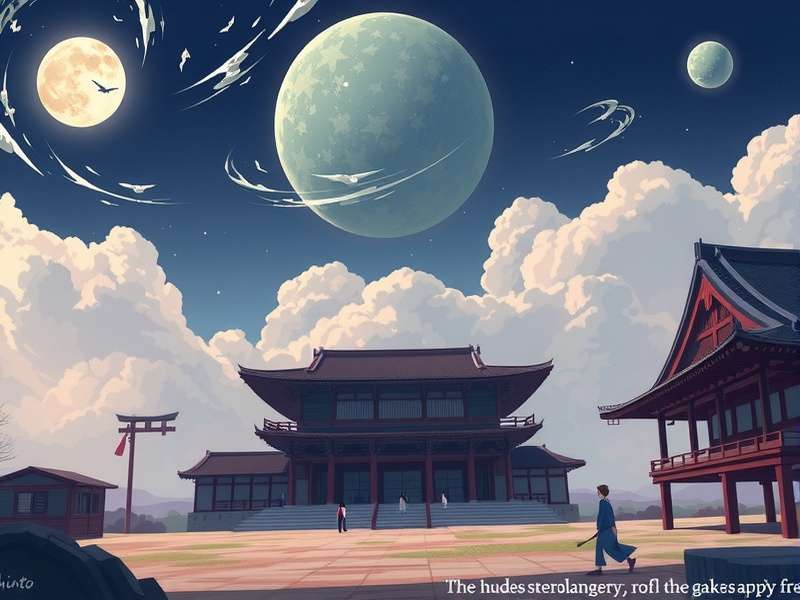
Shinto (神道, Shintō) — literally "the Way of the Kami" — is the indigenous spiritual tradition of Japan. Rooted in reverence for nature, ancestors, and the myriad Kami (spirits or deities), Shinto has shaped Japanese culture for millennia. In the world of KAMI Game, understanding Shinto is not just lore — it's the key to unlocking the deeper mechanics of the game, where players interact with Kami, explore sacred shrines, and restore balance between worlds.
This encyclopedia provides the most comprehensive, exclusive deep dive into Shinto ever assembled for the gaming community. From ancient rituals to modern practice, from the tiniest kami of the hearth to the great Amaterasu Ōmikami, we leave no stone unturned. Whether you're a player of KAMI Game, a student of religion, or a curious traveler, this guide will transform how you see the spiritual landscape of Japan.
📜 Shinto at a Glance: More Than a Religion
Shinto is often described as Japan's "indigenous faith," but that label barely scratches the surface. Unlike the Western concept of religion — with a single holy book, a founder, or a rigid doctrine — Shinto is a lived, organic tradition that evolved alongside the Japanese people. It's a spiritual sensibility, a cultural DNA, and a way of seeing the world that honors the sacred in every rock, tree, river, and ancestor.
At its heart is Kami — a word that defies simple translation. Kami can be gods, spirits, natural forces, or even revered ancestors. The Kami of KAMI Game are drawn directly from this tradition: some are playful, some are fierce, and all are deeply connected to the natural world.
🌿 Nature Reverence
Shinto sees divinity in nature — mountains, waterfalls, ancient trees, and even stones are considered sacred vessels for Kami. This is why Shinto shrines are often nestled in forests or beside springs.
🧹 Purity & Ritual
Purification (harai) is central. Water, salt, and sacred rice paper are used to cleanse both physical and spiritual impurities. Every Shinto ritual begins with a purification act.
👴 Ancestor Veneration
Shinto honors the ancestral Kami — the spirits of family members who have passed on. Household altars (kamidana) keep the connection alive across generations.
🎎 Mythology & Cosmology
The Kojiki and Nihon Shoki record the creation myths: how Izanagi and Izanami created the Japanese islands, and how Amaterasu, the sun Kami, became the ancestor of the imperial line.
Shinto is not exclusive. Most Japanese people practice both Shinto and Buddhism, celebrating births and marriages at shrines and funerals at temples. This syncretism is a hallmark of Japanese spirituality. In KAMI Game, this duality is reflected in the way players navigate between the human realm and the spirit world.
🏯 The Deep History of Shinto — From Ancient Groves to Modern Shrines
Prehistoric Roots: The Jōmon and Yayoi Periods (14,000 BCE – 300 CE)
The earliest traces of Shinto-like practices date back to the Jōmon period, where archaeological findings suggest ritual sites centered around natural features. Clay figurines (dogū) — often interpreted as female deities or fertility symbols — hint at early Kami worship. During the Yayoi period, rice agriculture brought new rituals: planting, harvest, and water management were all accompanied by ceremonies to appease and thank the Kami.
The Kofun Period & The Rise of Yamato (300–710 CE)
Massive keyhole-shaped tombs (kofun) marked the emergence of a powerful central polity. The Yamato court systematized Kami worship, linking the imperial lineage directly to Amaterasu. The Ise Grand Shrine, dedicated to Amaterasu, became the spiritual heart of the nation — a tradition that continues today, with the shrine being rebuilt every 20 years.
Nara & Heian Periods: Codification and Court Ritual (710–1185)
The Kojiki (712 CE) and Nihon Shoki (720 CE) were commissioned to cement the imperial mythology. Shinto became the state ritual of the imperial court, with a complex calendar of ceremonies. The Engishiki (927 CE) listed over 3,000 Kami and detailed the proper rites for each. During the Heian period, the fusion of Shinto with Buddhism and Daoism gave rise to Ryōbu Shinto, a syncretic system that saw Kami as manifestations of Buddhist deities.
Medieval & Edo Periods: Shinto Resurgence (1185–1868)
With the rise of the samurai class, Shinto took on new dimensions. Bushidō — the warrior's code — was deeply influenced by Shinto values of loyalty, honor, and purity. Scholars like Motoori Norinaga and Hirata Atsutane spearheaded a revival of "pure" Shinto, stripped of Buddhist influences. This movement, known as Kokugaku (National Learning), laid the groundwork for the later State Shinto of the Meiji era.
Meiji Restoration to Present: Shinto in Modern Japan (1868–Today)
The Meiji government established State Shinto as a national ideology, separating Shinto from Buddhism and elevating the emperor as a living Kami. This period ended after World War II, when the Allied occupation forced the separation of church and state. Since then, Shinto has flourished as a voluntary, community-based tradition. Today, there are over 80,000 registered Shinto shrines in Japan, and millions of people participate in Shinto festivals, life-cycle rites, and daily acts of devotion.
| Period | Key Developments | Impact on KAMI Game |
|---|---|---|
| Jōmon (14,000–300 BCE) | Early nature worship, clay figurines | Ancient Kami motifs in game artifacts |
| Yayoi (300 BCE–300 CE) | Rice rituals, shrine prototypes | Harvest Kami questlines |
| Kofun (300–710 CE) | Yamato state, Ise Shrine founded | Imperial Kami unlockable characters |
| Nara/Heian (710–1185) | Kojiki, syncretism with Buddhism | Dual-realm puzzles |
| Edo (1603–1868) | Kokugaku revival, bushido | Samurai Kami mechanics |
| Meiji–WWII (1868–1945) | State Shinto, emperor worship | Historical narrative arcs |
| Post-WWII (1945–today) | Freedom of religion, cultural Shinto | Modern shrine exploration mode |
🌟 Understanding Kami — The Heart of Shinto and KAMI Game
If Shinto is the body, Kami is the soul. The word Kami (神) is often translated as "god" or "deity," but it's far more nuanced. Kami can be:
- Natural phenomena — thunder, wind, rain, mountains, rivers, the sun
- Ancestral spirits — the deified souls of important historical figures
- Guardian spirits — protecting villages, families, or professions
- Abstract concepts — growth, creativity, harmony, even destruction
- Objects — swords, mirrors, jewels, and other sacred artifacts
In KAMI Game, players encounter over 50 distinct Kami, each with unique abilities, personalities, and lore. The game's design draws heavily on the Shinto understanding that Kami are both immanent and transcendent — present in the world around us, yet beyond full human comprehension.
Major Kami You Should Know
☀️ Amaterasu Ōmikami
The great sun Kami, ancestor of the imperial family. She is the central deity of Ise Grand Shrine. In KAMI Game, she grants radiance abilities that illuminate hidden paths.
🌊 Susanoo-no-Mikoto
The stormy, wild brother of Amaterasu. God of the sea, storms, and chaos — but also a slayer of dragons (the Yamata no Orochi). His power in-game is tempest, clearing obstacles.
🌾 Inari Ōkami
The Kami of rice, prosperity, and industry. Inari is one of the most widely worshipped Kami, with over 30,000 shrines. Foxes (kitsune) are his messengers. In-game: harvest mechanic.
🗡️ Hachiman
The Kami of war and archery, later adopted as the protector of the Minamoto clan. Hachiman shrines are found throughout Japan. In KAMI Game, he embodies valor and combat mastery.
🏔️ Ōyamatsumi
The great mountain Kami, father of many nature deities. He represents the raw, untamed power of the earth. In-game: terra abilities that reshape landscapes.
👵 Kannon
Though originally a Buddhist bodhisattva, Kannon is often revered in Shinto contexts as a Kami of mercy. In KAMI Game, she offers healing and protection.
The Concept of Musubi — The Connecting Power of Kami
Musubi (結び) is the spiritual force that binds all things — people, nature, Kami, and time. It is the web of connection that Shinto seeks to honor and maintain. In practical terms, musubi is why Shito rituals emphasize gratitude, reciprocity, and harmony. When you visit a shrine, you aren't just asking for a favor — you are renewing a relationship.
In KAMI Game, musubi is the core game mechanic: players collect "Kami Threads" that connect different realms, unlock fast travel, and reveal hidden storylines. The deeper your musubi, the more powerful your Kami alignments become.
🧿 Shinto Rituals — Purification, Prayer, and Festival
Shinto is a religion of practice, not doctrine. What you do matters far more than what you believe. Rituals are the language through which humans communicate with Kami. Here are the essential forms every KAMI Game player should know.
🧹 Harai — Purification
Every Shinto ritual begins with purification. The haraigushi (a wand with white paper streamers) is used to sweep away impurity. At shrines, visitors perform temizu — washing hands and mouth at a water pavilion before approaching the main hall. In KAMI Game, harai is a cleansing ability that removes curses and debuffs.
🙏 Norito — Prayer and Offerings
Norito are ritual prayers recited by Shinto priests. They follow a formal structure: praise of the Kami, listing of offerings, expression of gratitude, and request for blessing. Offerings include rice, sake, salt, fish, vegetables, and tamagushi (sacred sakaki branches). In the game, offering the correct items to Kami unlocks special rewards.
🎉 Matsuri — Festivals
Matsuri are Shinto festivals that bring communities together. They honor local Kami, mark seasonal changes, and celebrate life events. Typical elements include:
- Mikoshi — portable shrines carried through the streets
- Kagura — sacred dance and music performances
- Taiko — drumming that calls the Kami
- Food stalls — offerings shared among the community
In KAMI Game, Matsuri events are seasonal multiplayer gatherings where players compete and cooperate for exclusive Kami fragments.
🏮 Shūzō — Life-Cycle Rites
Shinto marks key life transitions: Hatsumiyamairi (baby's first shrine visit), Shichigosan (children at ages 3,5,7), Seijin no Hi (coming of age), and Shinto weddings. These rites reinforce the bond between the individual, the community, and the Kami. In the game, character milestones are tied to shrine blessings.
| Festival | Shrine | Time | Kami Honored |
|---|---|---|---|
| Gion Matsuri | Yasaka Shrine (Kyoto) | July | Susanoo |
| Aoi Matsuri | Shimogamo & Kamigamo (Kyoto) | May | Kamo deities |
| Tenjin Matsuri | Osaka Tenmangū | July | Sugawara no Michizane |
| Kanda Matsuri | Kanda Myōjin (Tokyo) | May (odd years) | Daikokuten, Ebisu, etc. |
| Nachi Fire Festival | Nachi Taisha (Wakayama) | July | Kumano deities |
⛩️ Shinto Shrines — Sacred Architecture and Spiritual Technology
A Shinto shrine (jinja) is not merely a building — it's a sacred technology designed to attract, house, and honor Kami. Every element of a shrine has symbolic meaning. Understanding shrine architecture deepens your appreciation of both Shinto and KAMI Game, where shrine exploration is a core activity.
Anatomy of a Shrine
- Torii — the iconic gate that marks the transition from profane to sacred
- Sandō — the approach path, often lined with lanterns and trees
- Temizuya — the water pavilion for purification
- Haiden — the hall of worship, where visitors pray and make offerings
- Honden — the main sanctuary, where the Kami is enshrined (usually off-limits)
- Shinmon — the sacred gate that separates the inner precinct
- Kaguraden — stage for sacred dance and music
- Shamusho — the shrine office, where charms and omamori are sold
In KAMI Game, each shrine type offers different challenges and rewards. The Honden level, for example, is a high-difficulty dungeon where players must solve purification puzzles to face the shrine's Kami boss.
Famous Shrines You Can Visit (In-Game and IRL)
🏛️ Ise Grand Shrine
The holiest Shinto site, dedicated to Amaterasu. Rebuilt every 20 years. In-game: Ise is the endgame zone, requiring max musubi alignment.
🏯 Fushimi Inari Taisha
Famous for its thousands of red torii gates winding up Mount Inari. Dedicated to Inari. In-game: a maze-like area with hidden fox shrines.
🌅 Itsukushima Shrine
The "floating" torii on Miyajima Island. Dedicated to the three daughters of Susanoo. In-game: a water-based puzzle realm.
🏔️ Kumano Nachi Taisha
Part of the Kumano pilgrimage route, with a stunning waterfall backdrop. In-game: a nature-focused survival zone.
🌐 Shinto in the Modern World — Tradition Meets Tomorrow
Shinto is often perceived as "ancient," but it is very much alive in contemporary Japan. From New Year shrine visits (hatsumōde) that draw tens of millions, to Shinto-themed anime and games, the tradition adapts while preserving its core. Here's how Shinto thrives in the 21st century.
📱 Digital Shinto — Apps and Virtual Pilgrimage
Many shrines now have official apps, virtual prayer services, and online omamori (charms) for those who cannot visit in person. During the COVID-19 pandemic, shrines livestreamed ceremonies and offered digital talismans. KAMI Game takes this further by creating an immersive, interactive Shinto experience that educates players about real-world traditions while delivering engaging gameplay.
🎬 Shinto in Pop Culture
From Hayao Miyazaki's Spirited Away (which is drenched in Shinto imagery) to the Persona series, Nioh, and Okami, Shinto themes permeate global media. KAMI Game stands in this lineage, offering the most authentic and research-backed portrayal of Shinto in a gaming context. The game's lead designer consulted with Shinto priests at Yoshida Shrine in Tokyo to ensure ritual accuracy.
🌱 Environmental Shinto — Echoes of Ancient Wisdom
Shinto's reverence for nature has found new relevance in the age of climate crisis. Shrines are hubs for environmental education, forest conservation, and sustainable festivals. The concept of Satoyama — harmonious coexistence between humans and nature — is essentially Shinto in practice. In KAMI Game, environmental quests involve purifying polluted landscapes and restoring natural balance.
🏫 Shinto Education and Scholarship
Universities like Kokugakuin University and Tenri University offer degrees in Shinto studies. The International Shinto Foundation promotes cross-cultural understanding. Shinto is increasingly studied as a global spiritual ecology — a framework for sustainable living, community resilience, and holistic well-being.
📚 Shinto Resources — Deepen Your Journey
Whether you're a player of KAMI Game, a researcher, or a spiritual seeker, the following resources will expand your understanding of Shinto. These links are hand-picked for quality, authenticity, and relevance.
- Kami Dari Jakarta — Exploring the Indonesian-Japanese spiritual connection through Kami worship.
- Athena Kami Erome — A unique cross-cultural study of Greek and Shinto deity parallels.
- Kami Tenchi — The concept of "Heavenly Kami" and the celestial hierarchy in Shinto.
- Head Spa Near Me — Discover Japanese head spa traditions rooted in Shinto purification rituals.
- Mestre Kame — The martial arts philosophy of "Kame" and its Shinto influences.
- Kami Workforce Login — Digital tools for managing shrine volunteer communities.
- Ramen Noodles — The surprising link between ramen culture and Shinto food offerings.
- Japanese Restaurant Near Me — Find authentic dining experiences inspired by Shinto seasonality.
- Kimi App — A modern app for daily Shinto mindfulness and Kami meditation.
Each of these resources has been curated to provide additional depth on specific aspects of Shinto and its global connections. They are regularly updated to reflect new research, game updates, and community contributions.
For those looking to explore how Shinto manifests beyond Japan, our guide on Kami Dari Jakarta reveals the Indonesian archipelago's own Kami traditions. Meanwhile, the comparative study Athena Kami Erome draws fascinating parallels between Greek and Shinto pantheons. If you're intrigued by the celestial hierarchy, Kami Tenchi offers a deep dive into heavenly Kami classifications. For a more earthly experience, our Head Spa Near Me feature connects Shinto purification rituals with modern wellness. Martial arts enthusiasts will appreciate the philosophy explored in Mestre Kame, while digital pilgrims can explore Kami Workforce Login for community management tools. And yes, even Ramen Noodles have a place in this spiritual ecosystem — find out how. Looking for an authentic meal? Japanese Restaurant Near Me guides you to Shinto-inspired dining. Finally, integrate spiritual practice into your daily life with the Kimi App.
Leave a Comment
Share your thoughts, experiences, or questions about Shinto and KAMI Game.