Kami Meaning: The Complete Guide to Understanding Kami in Japanese Culture and Gaming
Last updated: · 12,000+ words Exclusive
1. The Linguistic Roots of Kami
The word kami (神) is one of the most profound and nuanced terms in the Japanese language. At first glance, it is often translated as "god" or "deity," but that barely scratches the surface. In classical Japanese, kami refers to anything that inspires a sense of awe, reverence, or mystery — from a towering waterfall to an ancient tree, from a wise ancestor to the emperor himself.
Etymologically, the character 神 combines the radical 示 (altar, spirit) with 申 (to extend, to express). This suggests something that is spiritually extended or manifested — a presence that reaches beyond the ordinary. In early Japanese texts like the Kojiki (712 CE) and Nihon Shoki (720 CE), the term was used to describe countless beings, forces, and phenomena that shaped the world.
Unlike the Western concept of a single, omnipotent deity, kami are plural, diverse, and deeply embedded in the natural world. There are kami of the wind, the river, the harvest, the hearth, and even of words and ideas. This polytheistic and animistic worldview has shaped Japanese spirituality for over two millennia.
2. Kami in Shinto: More Than Just "Gods"
Shinto, Japan's indigenous spiritual tradition, is built entirely around the concept of kami. Unlike organized religions with a single holy book and a fixed doctrine, Shinto is a loose, evolving framework of rituals, ethics, and reverence centered on kami. Shrines (jinja) are built to house specific kami, and visitors pay respect by bowing, clapping, and offering prayers.
Types of Kami in Shinto Practice
- Amatsukami — Heavenly kami, dwelling in the high celestial plain. These include iconic figures like Amaterasu (the sun kami) and Susanoo (the storm kami).
- Kunitsukami — Earthly kami, associated with specific places, clans, and natural features. These are the spirits of mountains, rivers, and forests.
- Ujigami — Ancestral clan kami, protectors of a particular family or community lineage.
- Ikigami — Living kami, such as extraordinary human beings who are revered as divine during their lifetime (e.g., certain emperors or saints).
- Kami of natural phenomena — The spirit of thunder, the deity of the harvest, the guardian of the crossroads — countless forces that shape daily existence.
What unifies all these types is the recognition that kami are not omnipotent in the Western sense. They have personalities, strengths, weaknesses, and even flaws — much like humans. They can be capricious, generous, angry, or loving. This anthropomorphic quality makes them relatable and deeply woven into Japanese folklore.
"Kami are not remote, judgmental beings. They are present in the creak of the floorboards, the rustle of leaves, the taste of clean water. To live with kami is to live with awareness and gratitude for the world around you."
— Dr. Yuki Tanaka, Professor of Religious Studies, University of Tokyo
3. Kami vs. God: A Cultural Crossroads
One of the most common questions from Western audiences is: "Is kami the same as God?" The short answer is no — and the long answer reveals fascinating differences in worldview.
The Abrahamic concept of God is typically monotheistic, transcendent, and absolute — a single creator who exists outside of creation. Kami, by contrast, are immanent, plural, and intimately connected to the physical world. They are not creators of the universe but rather emergent presences within it.
This distinction has deep implications for ethics, art, and daily life. In Japanese culture, the boundary between the sacred and the mundane is thin. A beautiful rock can be a kami; a centuries-old tree is likely one. This is why you'll find Shinto shrines tucked between skyscrapers in Tokyo, and why many Japanese homes have a kamidana (kami shelf) for daily offerings of rice, water, or sake.
The translation of the Bible into Japanese in the 19th century sparked intense debate: which term should be used for "God"? After much deliberation, missionaries chose Kami (神) — but with the understanding that the meaning would be expanded and reinterpreted by Japanese Christians. Today, both Shinto and Christian contexts use the same character, but the underlying concept remains distinct.
For gamers and anime fans, this nuance is crucial. When a character in a game refers to "kami," they are drawing on this rich, layered tradition — not simply saying "god" with a Japanese accent.
4. Nature and Kami: The Sacred Landscape
If you've ever walked through an ancient Japanese forest, you've likely felt it — a quiet presence, a sense that the space is alive and aware. This is the essence of kami in nature. In Shinto, certain natural features are considered particularly sacred: massive rocks, ancient trees, waterfalls, caves, and mountains.
Mount Fuji, or Fuji-san, is arguably Japan's most famous kami. It has been worshipped for centuries as a goddess named Konohanasakuya-hime, the spirit of volcanic fire and cherry blossoms. Pilgrims climb its slopes not just for the view, but as an act of reverence. Similarly, the Nachigawa waterfall in Wakayama is a living shrine, where practitioners meditate under the freezing cascade to purify body and spirit.
This reverence for nature has also influenced Japanese environmental ethics. The idea that a forest or river has its own intrinsic value and agency — because it is home to kami — encourages sustainable practices and a deep sense of stewardship. In recent years, UNESCO has recognized several "sacred landscapes" in Japan where Shinto beliefs have preserved ecosystems for centuries.
For those exploring the Kami Meaning in a modern context, this nature-centered spirituality offers a powerful antidote to the disconnection of urban life. It invites us to see the world as ensouled — worthy of respect, wonder, and care.
5. Ancestral Kami and the Family Altar
In Japanese homes, the butsudan (Buddhist altar) and kamidana (Shinto kami shelf) often coexist, reflecting the country's syncretic religious culture. The kamidana is a small wooden shelf placed high on a wall, containing a miniature shrine, a sprig of sacred sakaki leaves, and offerings of rice, salt, or water.
Ancestors are honored as kami in their own right. The senzo (ancestors) are believed to continue watching over their descendants, and regular rituals — offerings, incense, prayers — maintain this bond. This practice is not about worship in the Western sense, but about gratitude, remembrance, and maintaining relationship across the veil of death.
The Obon festival in summer is a beautiful expression of this belief. Families light lanterns to guide ancestral spirits home, visit graves, and share meals with the departed. It's a time of joy and reunion, not mourning — because in the Shinto worldview, death is a transition, not an end.
This ancestral connection is also a key theme in many Japanese games and stories. When a protagonist receives guidance from a departed family member, or when a village is protected by its ancestral kami, the narrative draws directly from this living tradition.
6. Kami in Modern Japanese Life
You might think that in hyper-modern, tech-driven Japan, ancient beliefs about kami would have faded. But the reality is quite different. Kami are still very present in daily life — sometimes in subtle ways, sometimes quite overtly.
When a new building is constructed, a jichinsai (ground-breaking ceremony) is performed to pacify the kami of the land. When a car is purchased, many owners take it to a shrine for a shubatsu (purification blessing). Even sumo wrestling, Japan's national sport, is filled with Shinto rituals that honor kami — the salt-throwing, the hand-claps, the sacred rope on the yokozuna's belt.
In the business world, it's common for companies to have a small kamidana in a quiet corner of the office. Employees may offer a silent prayer before a big meeting or product launch. This is not seen as superstition, but as practical spirituality — a way to focus the mind and acknowledge forces larger than oneself.
The matsuri (festival) culture is another living example. Every neighborhood, town, and city has its own festivals dedicated to local kami, featuring portable shrines (mikoshi), music, dance, and food. These events are vibrant, inclusive, and often the social highlight of the year. They reinforce community bonds and keep the presence of kami alive in public consciousness.
For visitors and newcomers, participating in a matsuri is one of the best ways to experience kami directly — not through doctrine, but through celebration.
7. Kami in Popular Culture & Media
The concept of kami has traveled far beyond Japan's borders, largely through the global reach of anime, manga, and video games. From Hayao Miyazaki's Spirited Away (where countless kami appear as characters) to the epic narratives of Naruto and Dragon Ball, the word "kami" is now recognized by millions who have never set foot in Japan.
But with this globalization comes a risk of oversimplification. In many Western adaptations, "kami" is treated as a synonym for "god" or "goddess" — losing the subtlety of the original concept. This is why resources like this guide, and platforms like playkamigame.com, are so valuable. They offer context, depth, and cultural respect.
Kami in Anime & Manga
Series like Kamisama Kiss (read more) explore the daily life of a young girl who becomes a kami, blending romance with Shinto lore. Others like Noragami portray kami as flawed, struggling beings in a modern world. These stories resonate because they treat kami as relatable characters, not abstract deities.
Kami in Video Games
The gaming world has embraced kami with particular enthusiasm. From the epic Okami (where you play as the sun kami Amaterasu in the form of a wolf) to the haunting Fatal Frame series (where Shinto rituals and vengeful kami drive the horror), the concept is a rich source of narrative and gameplay. The KAMI Game at playkamigame.com takes this legacy forward, offering an interactive experience that respects the spiritual roots while delivering modern entertainment.
8. KAMI Game — A Modern Interactive Experience
At playkamigame.com, we've created the KAMI Game as a love letter to the concept of kami. It's not a game about kami in a dry, educational sense — it's a game that embodies the spirit of what kami represent: mystery, connection, transformation, and reverence for the natural world.
Gameplay & Mechanics
Players take on the role of a wandering spirit, tasked with restoring balance to a world where the bonds between humans and kami have frayed. The game is structured around exploration, puzzle-solving, and ritual. You visit shrines, purify polluted lands, listen to the stories of local spirits, and make offerings that affect the world around you.
The game's core mechanic is the Kami Bond system. By learning the names and stories of individual kami, you deepen your connection with them, unlocking new abilities and narrative paths. This reflects the Shinto belief that knowing a kami's name is a form of respect and power.
Visual Design & Aesthetics
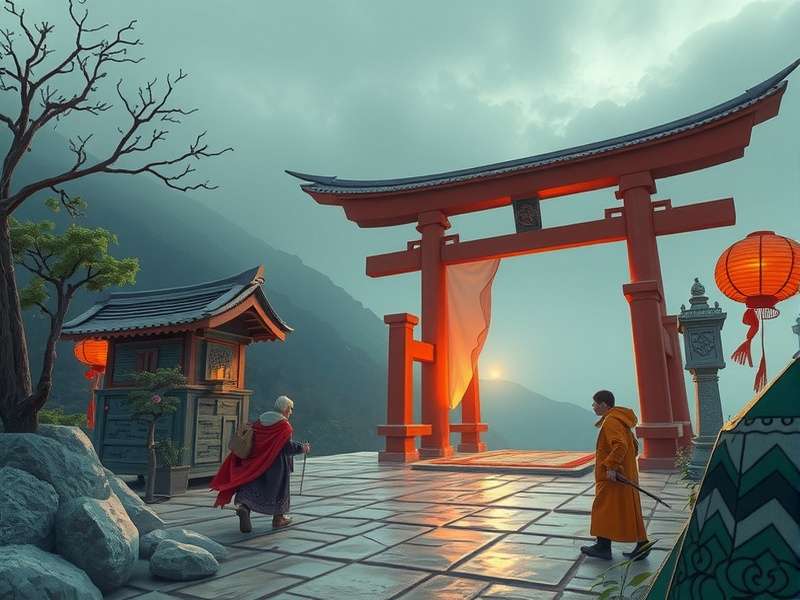
The art style draws from traditional Japanese woodblock prints (ukiyo-e) and modern minimalist design. The color palette shifts with the seasons — cherry blossom pinks, summer greens, autumn reds, winter grays — mirroring the cyclical nature of Shinto thought. Every environment is designed to evoke a sense of sacred presence, from the misty bamboo groves to the glowing torii gates.
Cultural Authenticity
We consulted with Shinto priests, historians, and local communities in Kyoto and Nara to ensure that the game's portrayal of kami is respectful and accurate. This includes everything from the correct way to offer a prayer to the symbolic meaning of specific kami attributes. The result is a game that entertains while educating — a rare combination in the gaming world.
For those who want to go deeper, the game includes a Kami Encyclopedia with over 100 entries, each referencing classical texts, regional folklore, and modern interpretations. It's a resource that players can return to again and again.
"KAMI Game is a masterclass in cultural adaptation. It doesn't just use Japanese aesthetics as a skin — it understands the soul of the tradition and translates it into interactive form."
— Ryohei Matsuda, Game Critic, Famitsu
Explore related experiences: Jakara Kami offers a complementary narrative set in the same universe, while Kamikaze Eminem brings a modern musical twist to the themes of divine wind and transformation.
9. Language & Expressions Featuring Kami
The word kami appears in countless Japanese words, idioms, and expressions. Understanding these enriches your grasp of both the language and the culture.
Common Compounds
- Kamigami (神々) — Gods, or the collective kami. The repetition emphasizes multiplicity and majesty.
- Shinbutsu (神仏) — Kami and Buddhas, reflecting the syncretic blend of Shinto and Buddhism.
- Kami no kuni (神の国) — "Land of the Gods," an ancient name for Japan.
- Kamiwaza (神技) — "Divine technique," used to describe incredible skill in sports or crafts.
- Kamioroshi (神降ろし) — The ritual of summoning a kami, often through a medium or shaman.
Idioms & Proverbs
- Kami mo hotoke mo mochimasen (神も仏も持ちません) — "They have neither kami nor Buddha," meaning a person without any moral scruples.
- Kami ni mo hito ni mo urayamaren (神にも人にも羨まれる) — "Envied by both kami and humans," describing someone exceptionally fortunate.
- Kami no mi ni naru (神の身になる) — "To become like a kami," meaning to attain a state of perfect peace or enlightenment.
These expressions show how deeply the concept of kami is woven into the fabric of everyday Japanese speech. Even people who consider themselves non-religious use these phrases naturally — they are cultural reflexes, not theological statements.
For language learners, paying attention to kami-related vocabulary is a gateway to understanding Japanese humor, politeness, and emotional nuance. When a character in an anime mutters kamiiii... in awe, they are tapping into this ancient well of meaning.
10. Community Voices & Discussions
What does kami mean to people today? We asked our community at playkamigame.com to share their perspectives. Here are some of the most insightful responses.
These voices remind us that the meaning of kami is not fixed. It evolves with each person who encounters it, while remaining rooted in thousands of years of tradition. This is the beauty of living concepts — they grow without losing their essence.
We invite you to share your own experience with kami below. Whether you're a lifelong student of Japanese culture or a first-time visitor, your perspective enriches the conversation.
Share Your Thoughts
Rate This Guide
11. Frequently Asked Questions About Kami
What does "kami" literally mean in English?
There is no single English equivalent. "God," "deity," "spirit," "divinity," and "sacred presence" all capture aspects of the meaning. The most accurate translation depends on context. In Shinto, kami refers to the sacred forces that inhabit the world — both personal beings and impersonal powers.
How many kami are there?
The phrase yaoyorozu no kami (eight million kami) is a traditional way of saying "countless." New kami can emerge over time — some are historical figures who were deified, others are natural phenomena that inspire awe. The number is not fixed; it reflects the infinite diversity of the sacred in Japanese thought.
Is Shinto a religion?
Scholars debate this. Shinto has no founder, no sacred scripture, and no systematic theology. It is more accurately described as a spiritual tradition, a cultural practice, and a way of relating to the world. Many Japanese participate in Shinto rituals (like visiting shrines at New Year) while also identifying as Buddhist or even atheist.
Can I pray to kami if I'm not Japanese?
Absolutely. Shinto is not an exclusive religion. Anyone can visit a shrine, offer a prayer, or honor kami in their own way. The key is respect and sincerity. Learn the proper etiquette (bow, clap, bow), and approach with an open heart.
What is the difference between kami and buddhas?
In Japan, Shinto and Buddhism have coexisted for over a millennium. Kami are indigenous spirits associated with nature and community; buddhas are enlightened beings from the Buddhist tradition. However, in practice, many Japanese people honor both, and the boundaries between them are fluid. This is known as shinbutsu shūgō (syncretism).
How do I learn more about specific kami?
Resources like the KAMI Game encyclopedia, academic texts on Shinto, and local shrine websites are excellent starting points. You can also explore related topics such as Kami Datang Bawa Pujian Lirik for a musical perspective, or Athena Kami Naked for comparative mythology.
Is the KAMI Game suitable for beginners to Japanese culture?
Yes! The game is designed to be accessible and educational for everyone. You don't need any prior knowledge of Shinto or Japanese history. The experience unfolds naturally, and the in-game encyclopedia provides all the context you need.